Burnout

Group/Introductory Lesson
My second year in the classroom changed me. Instead of looking at names and the whole student, guidance tried something new when forming classes. They wrote the student’s name on one side of the index card and their math and reading state test scores on the back. They created all the fourth-grade classes by making sure there were an equal number of all levels in every classroom. Conceptually, this was brilliant, but realistically, it became a nightmare.
Over the first several weeks, I collected all the hands-on manipulatives, even pencils, markers, erasers, and crayons. Nothing could be “left out” on the tables or it became a projectile. At first, I didn’t know where the objects originated from in my classroom. The guilty parties were stealthy. Then I began turning my attention at odd times and soon, I figured out who the culprits were. After much investigation, I realized that every bully from the third grade had been placed in my class, and instead of them targeting each other, they joined allegiances.
Lunchroom monitors, janitors, P.E. coaches, and neighboring teachers constantly gave me bad reports about this group of students in my class. My classroom monitoring intensified and I caught the kids in action more often. In class, I had to run a tight ship or else they would take over the class. They even got kicked out of P.E. with the other classes and had to have their own special time because they were fighting and bullying the other kids so intensely.
The bullies were written up often, usually by bus drivers or hallway monitors for fighting. Sometimes the behavior in the class sent me over the edge and I called parents. Other times, I wrote referrals. By the middle of the school year, the administration lovingly referred to my class as Adams’ Mafia and there were no substitutes who would agree to take my class when I had mandatory trainings.
I sought advice from my principal. I tried to leave on time and not take tons of work home. But no matter what I did, nothing helped with the overwhelm I was feeling. Incentives didn’t work. Punishment didn’t work. Calling home didn’t work. Removing them from class didn’t work. By March, I was losing my mind and ready to pull my hair out.
One Wednesday afternoon, late in March, that group of bad kids pushed all my buttons and I couldn’t take it anymore. At 2:15, I walked out, planning to never come back. If that was teaching, I couldn’t do it. I told the teacher next door that I was done, and she could take my class to the bus. And I left.
My principal called me that night and begged me to return. After much discussion and her promise to take care of my class the next two days, I agreed to a long, mental health weekend. While I spent time alone that weekend, a deep truth hit me. I was burned out. I wasn’t a bad teacher. In fact I was actually a decent teacher. But I was pouring everything I had into a bunch of hooligan children and there was nothing going back in to fill me up.
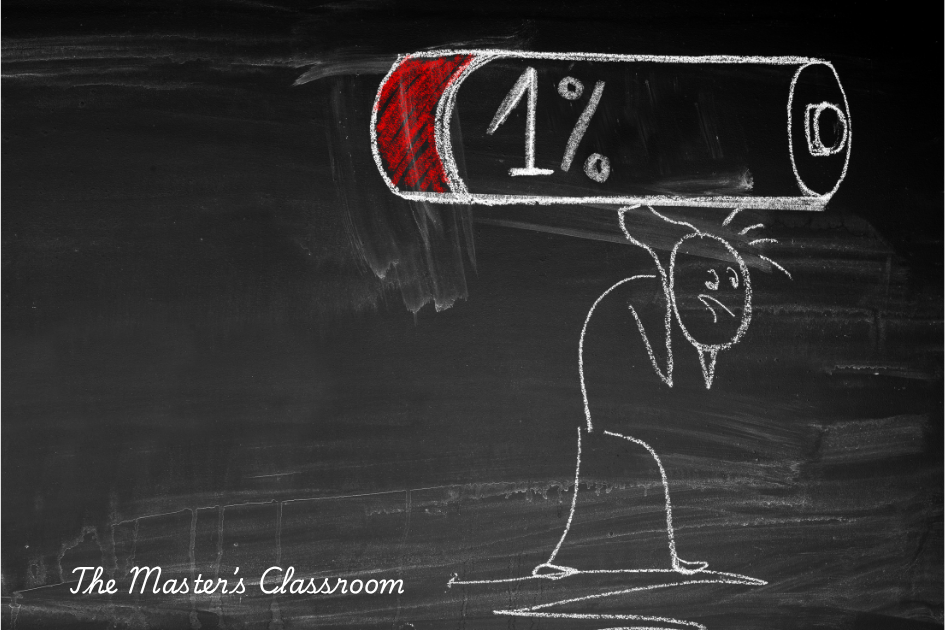
This week, we are looking at burnout. There were subtle signs throughout the year I could have noticed if I’d known, but I had no clue. Burnout is bigger than exhaustion, it’s debilitating and means our body isn’t functioning the way it was designed. God’s master design is so much better if we understand it. And when we don’t, burnout runs its full course and we are toast.
Scripture Reading:
Read 1 Kings 19:1-9 (NIV)
Now Ahab told Jezebel everything Elijah had done and how he had killed all the prophets with the sword. So Jezebel sent a messenger to Elijah to say, “May the gods deal with me, be it ever so severely, if by this time tomorrow I do not make your life like that of one of them.”
Elijah was afraid and ran for his life. When he came to Beersheba in Judah, he left his servant there, while he himself went a day’s journey into the wilderness. He came to a broom bush, sat down under it and prayed that he might die. “I have had enough, Lord,” he said. “Take my life; I am no better than my ancestors.” Then he lay down under the bush and fell asleep.
All at once an angel touched him and said, “Get up and eat.” He looked around, and there by his head was some bread baked over hot coals, and a jar of water. He ate and drank and then lay down again.
The angel of the Lord came back a second time and touched him and said, “Get up and eat, for the journey is too much for you.” So he got up and ate and drank. Strengthened by that food, he traveled forty days and forty nights until he reached Horeb, the mountain of God. There he went into a cave and spent the night.
If you have time to go back and read chapter 18, you’ll see that Elijah has just been apart of a huge slaughter of idol worshiping priests and he brought down fire from heaven by praying and asking God to show up. Huge events of scripture that should have left Elijah on a spiritual high, but instead we find him running for his life, afraid, and utterly exhausted.
Discussion
1. Have you ever reached the point of burnout? What led up to that point?
2. When you’ve had a taxing week, what are some things you do to bring calm into your life?
3. Describe the way you feel when in situations like I described earlier, where you feel overwhelmed with nothing left to give.
4. How does our faith fit into burnout?
Personal Reflection
Examine yourself in relation to burnout. Are you just tired? Are you worn out? Do you need a break? Or are you about to break? Spend time in prayer, talking with a friend, and journaling. Ask the people closest to you if they have any concerns about your regular interactions and responses.


Comments